Decision-makers touting the social ban as a way to protect children fail to understand the importance of online community for LGBTQ+ youth, for whom a reliable and accessible place of support and belonging isn't just ideal – it's lifesaving.
Guest opinion: In just over a month from now, Australian youth under the age of 16 will wake up to find themselves excluded from the online platforms where they chat with their friends, message their group chats, and get their information about the world around them.
Government officials and the eSafety Commissioner tell us that the so-called "social media ban", which comes into effect on December 10, will "protect young Australians from pressures and risks". But in reality, the ban will cut off LGBTQ+ youth, especially those living in regional and/or socially conservative areas, from vital safe spaces and peer support online.
Decision-makers touting the ban as a way to protect children fail to understand the importance of online community for LGBTQ+ youth. The eSafety Commissioner's own data shows that more than half of LGBTQ+ youth aged 14-17 feel that they can be more themselves online than in person.
Minus18's National Youth Survey found that 53 per cent feel safe being "out to all" in online spaces, compared to only 30 per cent at school. Young LGBTQ+ people face mental health challenges at a significantly higher rate than others, especially trans young people who are ten times more likely to suffer from serious depression and anxiety than other young Australians.
Considering that 55 per cent of LGBTQ+ young people said they’ve been excluded or discriminated against due to their identity, a reliable and accessible place of support and belonging isn't just ideal – it's lifesaving.
This was the reality for Raine Osborne, a non-binary teen from Sydney, who is a co-founder with me in One Law For All NSW, a youth-led advocacy organisation that exists to fight for the protection of LGBTQ+ students in NSW.
"For me, social media brought me a community when I was at my lowest. I was a young queer kid in a small school in Sydney, I came out and I got bullied relentlessly," Osborne says.
"I had slurs yelled at me, objects thrown at me, a lot of my friends left me and I was at a really low point. I found friends online, things like Discord, TikTok and Instagram brought me to a community of other young queer kids who were experiencing what I was.
"Kids who had similar experiences, from all over the world, who made me feel seen and safe. By banning social media for under-16s, you're taking away a vital opportunity for these kids to find community.
"Taking away a space for young queer teens to express themselves. If it wasn't for my online community, I don't know where I would be now."
Additionally, social media is too often the only available source of information about sexuality and gender for a questioning young person. Especially for those from more conservative upbringings and/or regional and rural communities, these topics might never be discussed in educational or family environments.
Sixty-three per cent of LGBTQ+ young people turn to online communities for support with their identity, and 44 per cent turn to influencers or content creators – compared to 26 per cent for parents and just 18 per cent for school staff.
The ban will restrict access to these online spaces during the exact period of life where young people are most likely to be questioning their identities, cutting them off from information and support that may not be accessible anywhere else in their life.
The negative impacts of social media on young people, including cyber-bullying and exposure to horrific content, are real and of absolute priority. But as young LGBTQ+ people face daily abuse and violence, a growing mental health crisis and scapegoating by hostile political actors, the solution is not to take away what is often the only place they can feel truly accepted.
The federal government risks doing exactly this, all the while refusing to comment on how it will support queer-safe offline spaces once the ban comes into effect.
One Law For All NSW shares the deep real fears and concerns of Australia's LGBTQ+ youth, 1 in 10 of our nation's young people, regarding the proposed ban, and call on the government to enact real change to protect young people from danger in the digital world without further marginalising already vulnerable and isolated groups.
If your mental wellbeing is affected by the topics spoken about above, a list of support services can be found below:
- Beyond Blue – 1300 22 4636
- Lifeline – 13 11 14
- Kids Helpline – 1800 55 1800
- QLife – 1800 184 527
- headspace – 1800 650 890
- Suicide Callback Service – 1300 659 467
- MensLine Australia – 1300 78 99 78

Patrick Jones
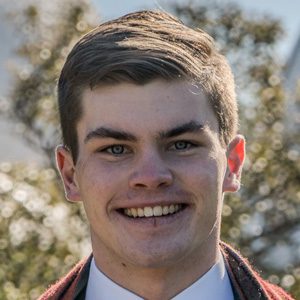
Patrick Jones is the 16-year-old co-founder of One Law For All NSW, a youth-led advocacy organisation that exists to fight for the protection of LGBTQ+ students in NSW.